

Cute Christmas List Ideas: How to Actually Ask for What You Want
TL;DR
- Your Christmas list is a gift to the people shopping for you. Make it easy to use.
- Include links. Always. Never make anyone guess which version you want.
- Include 3 price tiers — so anyone can buy for you comfortably.
- Be specific about size, color, and scent. 'Any candle' is a lie.
Writing a Christmas list as an adult is weirdly hard. You don't want to seem greedy, you don't want to get stuff you won't use, and you definitely don't want to end up with another candle in a scent you hate. Cute Christmas list ideas aren't about asking for more — they're about asking specifically, so the people who love you can actually get you something you'll love back.
Specificity is the whole game
'A candle' is a bad list item. 'The Boy Smells Cashmere Kush candle in the 8.5oz size' is a great list item. The difference isn't asking for more — it's letting the person giving the gift skip the anxiety of picking. Every detail you cut out is a decision you've made them make on their own.
If you have a color preference, include it. Size? Include it. Scent? Include it. Link to the exact product? Absolutely include it. Nobody thinks you're being demanding — they think you're being helpful.
Frame the whole list as 'stuff I'd buy myself this year if I had no list.' Not 'things I want from you.' It removes the ick of asking and turns it into a recommendation they can follow or ignore.
Build three price tiers
This is the move that makes everything work. Split your list into three tiers: under $20, $20–$50, and $50+. That way your coworker doing Secret Santa, your best friend, and your parents can all find something that matches their budget without feeling awkward comparing what to get.
The three-tier list structure
| Tier | Budget | What goes here | Example |
|---|---|---|---|
| Small | Under $20 | Stocking-sized, low-stakes | A cute mug or a specific lip balm |
| Mid | $20–$50 | The sweet spot for most gift-giving | A candle, a plushie, a skincare set |
| Nice | $50+ | The one 'big thing' you actually want | A cozy robe or a small ceramics set |
Don't stack the $50+ tier with ten items. One well-chosen 'nice' item signals what you actually want and doesn't put anyone on the spot.
Plushies count (and you should ask)
If you're an adult who still loves a good plushie, put one on your list. Adult plushie-gifting is low-key the biggest shift in gift culture in the last five years and it's only gotten more normalized. The trick is specificity — pick the exact weird one you've had saved in a tab for six months, not 'a plushie.'
Plushies worth putting on your list
Weird shapes, specific personalities, things that stay cute when they're sitting on your bed at 30.

Teyva Daily Positive Handmade Dumpling Crochet Gifts, Inspirational Crochet Dumpling Stress Relief Desk Buddy Decor Easter Basket Stuffers Birthday Gift for Women Men Couples Friends(Jiaozi)

LuoHere for Wife Her Him Anniversary I Love You Gifts for Women Men Girlfriend Husband Boyfriend Birthday Gift, Funny Valentines Card Christmas Easter Couples Romatic Gift for Fiance

Douglas Louie Corgi Dog Plush Stuffed Animal

KOWSI® Microwavable Heating Music-Loving Penguin Plush - Weighted Stuffed Animal Toy Tourmaline Beads & Lavender - 1 lb for Long Lasting Cozy Warmth & Relaxation - Includes Gift Box & Greeting Card

LEGO Creator 3 in 1 Typewriter with Flowers - Building Toy with 3 Building Options, Typewriter, Flowerpot with Pen & Notebook, or Keytar - Gift Idea for Birthdays - 31169

YOUBLEK 40In 2Lb Weighted Stuffed Animals,Cute Plush Dragon,Weighted Stuff Dinosaur Toy for Kids Adult Gift or Decoration (2lb, Green)
Candles, done right
Candles are the most common gift on earth and also the most commonly returned. The reason is that people buy candles for the label, not the scent profile. If you want a candle on your list, include the scent family you actually like and link to one you've already sniff-tested.
- If you like warm scents: say 'warm, not sweet' — amber, sandalwood, tobacco, leather.
- If you like fresh scents: say 'green or citrus, not floral' — eucalyptus, grapefruit, mint.
- If you like cozy scents: link a specific one. Cozy is too subjective to describe.
- Never just write 'candle' — you'll get vanilla cupcake. Guaranteed.
Drinkware is the reliable category
Mugs, tumblers, glass cups with the ridged bottoms — drinkware wins because it's actually used daily and doesn't clutter the house. Ask for the color you'll use, not the color you think is pretty in the photo. A white mug lives on your desk. A pastel yellow one ends up in the back of the cabinet.
Drinkware that earns its counter space

U-Goforst Teacher Appreciation Gifts for Women, Gifts for Teachers, Teacher Gifts Supplies for Valentines Christmas Birthday Back to School Valentine Graduation Retirement
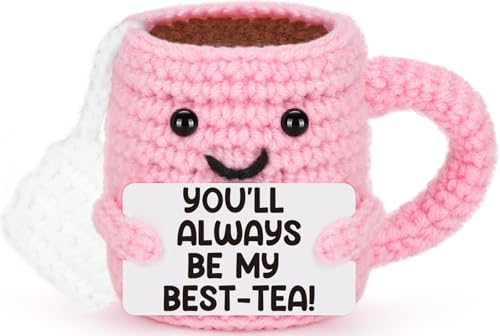
Funny Teacup Best Friends Friendship Gifts for Friend Bff Women, Mothers Day Birthday Long Distance Gifts for Besties Her Female Soul Sister, Cute Small Handmade Emotional Crochet Tea Cup Desk Decor

Stickers for Water Bottles, 200 Pack/PCS Cute Vsco Vinyl Aesthetic Waterproof Stickers Laptop Hydroflask Skateboard Computer Stickers for Teens Kids Girls

200Pcs Vintage Stickers, Aesthetic Scrapbook Stickers for Water Bottle, Notebook Junk Journaling, Waterproof Vinyl, for Kids Teenagers Adults
Beauty and skincare — a landmine you can navigate
Asking for beauty gifts without being specific is how you end up with foundation in the wrong shade. Stick to products where shade doesn't matter — lip balm, hand cream, body oil, skincare basics you've already tried. Or: link an exact shade with the exact name.
Unless the gifter is a makeup artist, 'surprise me' in the beauty category ends with you smiling politely at a palette of eyeshadows you will never wear. Link the exact thing, every time.
How to actually send the list
Don't overthink the format. A shared Google Doc is fine. A shared Notion page is fine. Amazon wishlists work if your people are already on Amazon. The key is: one link they can open, price tiers labeled, product links included, and one sentence at the top that says 'here's stuff I'd love — no pressure to pick from this.' That's it.
Your list-making checklist
0/6If multiple people are going to ask what you want, send the list once in a group text with parents/siblings/close friends. You only have to write it once and everyone gets the same info at the same time.
What to leave off entirely
Your cute Christmas list ideas shouldn't include anything you'd feel weird receiving. That's the whole filter. If your aunt would be embarrassed handing you a $200 pair of earrings, don't put them on a list she'll see. Keep the 'big' items for people who you'd feel comfortable getting them from.
- Don't list anything over $100 unless a specific person already offered to go big.
- Don't list things that require sizing you haven't confirmed (most clothing, rings, shoes).
- Don't list 'experiences' unless the person you're listing them for has already hinted they'd love to do one with you.
- Don't list anything you wouldn't actually unwrap with a genuine smile.
One-line version
A cute Christmas list is just a specific, linked, three-tier recommendation of things you'd buy yourself. That's the whole thing. Write it once, share it casually, and let the people who love you skip the anxiety spiral of gift-shopping blind. Everyone wins, and you don't end up with three candles in scents you hate.
Quick questions
Completely the opposite — direct links are a gift to the people shopping for you. Without a link, they have to play roulette with dozens of similar-looking items on Amazon and hope they pick the one you meant. With a link, everyone wins. Always include links.
Ten to fifteen items across three price tiers ($10–$25, $25–$50, $50+) is the sweet spot. Fewer than ten feels limiting; more than twenty feels greedy. Mix cute little items (stocking stuffers) with bigger wishes so people shopping at different budget levels have options.
Pick one. Listing the same item in three colors signals indecision and also risks someone buying you 'blue' when 'pink' was your real preference. Decide ahead of time, pick the one you want, and list it once. If you genuinely like multiple colors, pick one for the list and note 'or any color' in parentheses.
Frame it as 'things I'd get myself if I had a little extra money.' That reframing removes the awkwardness of gift-asking. It's not 'I want this' — it's 'I'd treat myself to this, and if you wanted to do that for me, you could.' Softer, more honest, and actually leads to lists that match what you want.
Still scrolling? Let us do the picking.
We built an Instagram-style swipe deck of every cute thing in our gallery. Swipe right on the ones you love — it's faster than reading reviews.